Mission Objective
Sound, Music and Rhythmic Auditory Events are all known to have a positive effect on Parkinson’s capabilities to move, as well as slowing down the neurodegenerative condition. With precise parameter mapping, and integrated technologies, there is much left to explore.
Overview
Within this project, we were able to reduce the movement parameters to vertical height tracking, by focusing on the physiotherapy routine ‘Sit-to-Stand’ (STS). At even divisions of the vertical range of movement there were pitch changes triggered. This then provides two dimensions of auditory feedback – note event onset (as the different height levels are reached) and pitch information (vertical height tracking to pitch height).
The height levels were mapped to the dorian scale – which is a reasonably neutral emotional sequence, and the minor third note was removed to achieve even more neutrality. This was in order to see if pitch movement is effective without too much emotional influence. In earlier trials simple wave forms were used – to remove cultural implications, however this was not popular with participants, so Piano was used, which is the most common instrument, and so less distracting from the task.
Collaborators
Andrzej Mitas
Daniel Lewoń
Patrycja Romaniszyn-Kania
Aleksandra Tuszy
Images / Video
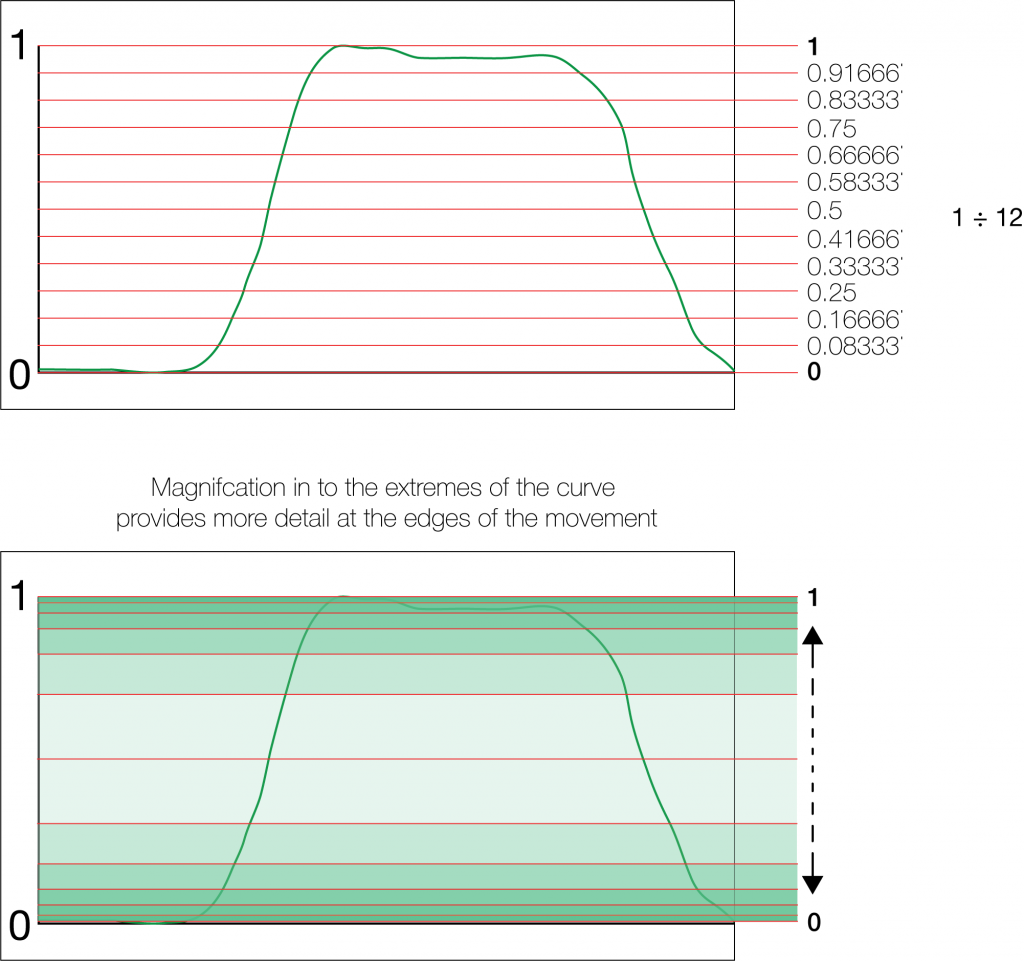
Figure – showing distribution of height range, each horizontal line is mapped to MIDI notes, in pitch order (low to high)